
How to Master Brewing Oolong Tea: Essential Techniques and Steps
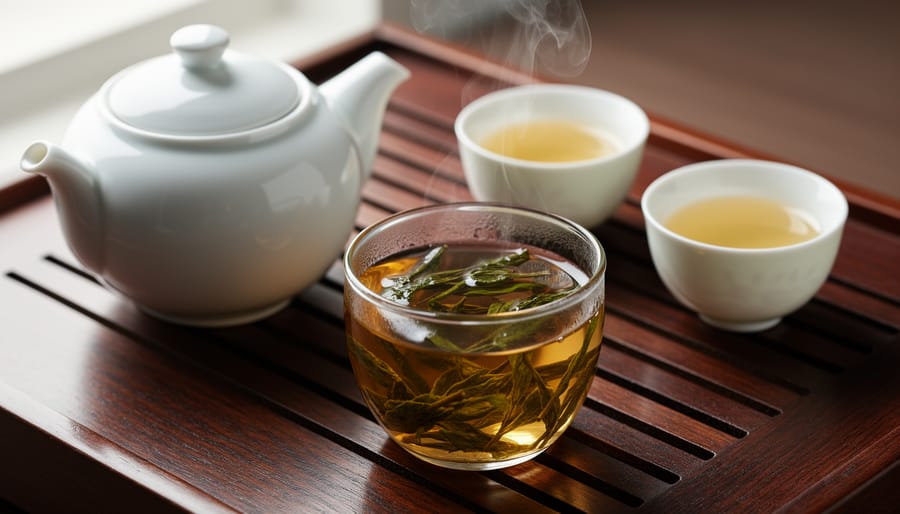
Brewing oolong tea correctly comes down to three essentials: water temperature between 185-205°F, multiple short infusions starting at 30-60 seconds, and a higher leaf-to-water ratio than you’d use for black or green tea. Unlike teas that tolerate only one steeping method, oolong’s partially oxidized leaves reward precision with layers of flavor that evolve across five or more infusions, transforming from floral and light to rich and toasted as you go.
The technique matters because oolong occupies the vast middle ground between green and black tea, spanning oxidation levels from 10% to 80%. This range means a lightly oxidized Tieguanyin and a dark-roasted Da Hong Pao require different approaches despite sharing the same category. Get the temperature wrong and you’ll either scald delicate leaves into bitterness or fail to coax flavor from heavily oxidized varieties.
Tea masters across China and Taiwan have refined these methods over centuries, developing the gongfu style that uses small vessels and repeated steepings to reveal an oolong’s full character. While Western-style brewing in a large teapot works perfectly well for daily drinking, understanding the parameters gives you control over strength, astringency, and the aromatic progression that makes oolong so distinctive. Whether you’re working with a glazed gaiwan or a simple mug, the principles remain consistent: respect the leaf, watch your timing, and give those leaves room to unfurl.
What You’ll Need to Brew Oolong Tea
To brew oolong tea properly, you’ll need a few essential items that directly influence the final cup’s quality and flavor. While you don’t need to invest in expensive equipment right away, certain tools make the process easier and more consistent.
Essential Brewing Equipment:
- Teaware: A gaiwan (traditional lidded bowl), small clay teapot, or standard western teapot, each vessel offers different benefits for temperature control and leaf expansion
- Quality oolong tea: Loose-leaf tea from reputable sources, whether you’re exploring the best oolong brands or local tea shops
- Water thermometer or temperature-controlled kettle: Critical for hitting the precise 185-205°F range that oolong demands
- Filtered or spring water: Chlorine and minerals in tap water can mask oolong’s delicate flavors
- Small measuring spoon or scale: For consistent tea-to-water ratios (typically 5-8 grams per 6 ounces)
- Timer: To track steep times accurately, especially during multiple infusions
- Serving pitcher (optional): Useful for decanting tea to prevent over-steeping
The type of teaware you choose matters more for oolong than for most other teas. A gaiwan or small teapot (100-150ml capacity) works best for traditional gongfu brewing, which lets you extract multiple infusions from the same leaves. These vessels make it easier to control steep times and observe how the leaves unfold. Clay teapots absorb and enhance flavors over time, but they’re best dedicated to one type of oolong to avoid flavor cross-contamination.
Water quality can’t be overlooked. Oolong’s complex flavor profile, ranging from floral and creamy to roasted and fruity, gets easily overwhelmed by chlorine or heavy minerals. Filtered water strikes the right balance, providing enough mineral content for flavor extraction without introducing off-tastes.
A thermometer or variable-temperature kettle is your most important precision tool. Light oolongs bruise easily and turn bitter above 195°F, while darker roasted varieties need hotter water to fully open and release their depth.
Understanding Oolong Tea Variables
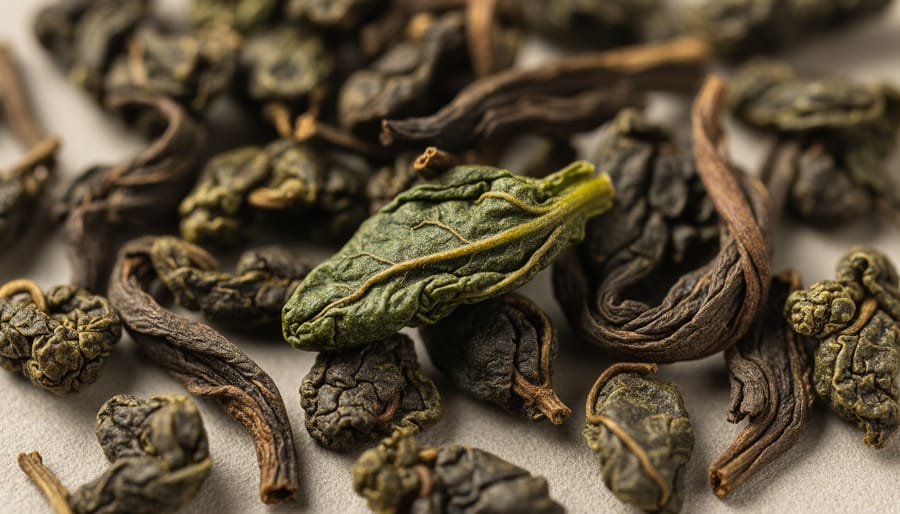
Oolong tea occupies a vast spectrum between green and black tea, and understanding where your specific oolong falls on that continuum determines nearly every brewing decision you’ll make. The oxidation level, ranging from 10% in a barely-oxidized Baozhong to 70% in a heavily-roasted Da Hong Pao, shapes the leaf’s chemical structure, flavor compounds, and heat tolerance. Light oolongs (10-40% oxidation) resemble green tea in their delicate floral notes and sensitivity to high temperatures, while dark oolongs (50-70% oxidation) develop robust, roasted, sometimes fruity characteristics that can handle, and often benefit from, hotter water and longer steeping.
Processing style adds another layer of complexity. Rolled oolongs like Tie Guan Yin form tight balls that unfurl slowly, requiring a rinse and patience across multiple infusions to fully open. Twisted or strip-style leaves, common in Wuyi rock teas, release flavor faster but reward careful timing. Roasting intensity matters too, a heavily roasted oolong develops caramelized, toasty notes that mask bitterness, giving you more margin for error than a lightly-processed jade oolong where even thirty extra seconds can turn floral sweetness into vegetal astringency.
Reading your specific tea means examining the dry leaf before you brew. Tightly rolled balls signal gradual extraction; open, twisted leaves mean quicker flavor release. Dark, glossy leaves with a roasted aroma tolerate aggressive brewing. Pale green leaves with fresh, grassy scent demand gentleness. Tea master James Norwood Pratt notes that “the leaf itself is your brewing guide, its appearance, fragrance, and texture tell you how it was made and therefore how it wants to be treated.” Trust what you observe over generic instructions.
Important Brewing Considerations
Before you brew your first cup, a few critical considerations will determine whether you unlock oolong’s complexity or end up with bitter disappointment. Unlike forgiving black teas, oolongs punish imprecise technique, especially at the extremes of water temperature and steeping time.
The oxidation level of your specific oolong dictates your approach. Lighter oolongs (10-40% oxidation) like Tie Guan Yin demand gentler handling, think 185-195°F and shorter initial steeps of 30-60 seconds. Darker varieties such as Da Hong Pao tolerate and actually benefit from hotter water (195-205°F) and slightly longer contact time. Treating all oolongs identically is the most common mistake we see, resulting in either weak, flat tea or an astringent mess that misrepresents the leaf entirely.
Storage matters more than most realize. Oolongs exposed to air, light, or moisture lose their aromatic compounds rapidly, and stale leaves won’t respond properly to even perfect brewing parameters. Keep your tea in an airtight container away from strong odors, oolongs are particularly absorbent. If your leaves smell musty or lack vibrance when you open the package, no amount of careful technique will rescue the cup. Fresh, properly stored oolong is your foundation; everything else builds from there.
Step-by-Step Oolong Tea Brewing Process
Preparing Your Water and Teaware
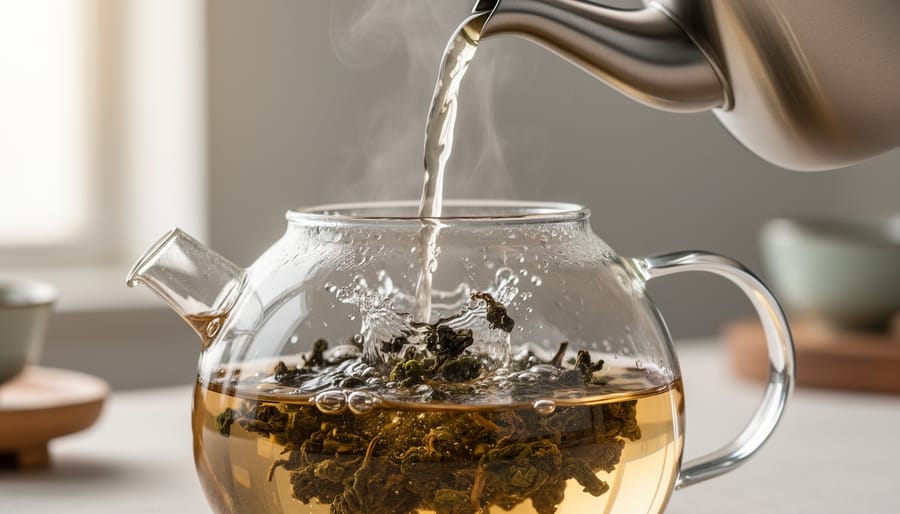
Start by heating your water to match your oolong’s oxidation level. Lightly oxidized oolongs, like Tie Guan Yin, need cooler water around 185-195°F to preserve their delicate floral notes. Darker oolongs such as Da Hong Pao handle hotter water at 200-205°F, which unlocks their roasted, complex character. If you don’t have a variable-temperature kettle, bring water to a boil and let it cool for 2-3 minutes for lighter oolongs, or 30-60 seconds for darker varieties.
While your water heats, warm your teaware by rinsing it with hot water. This simple step prevents temperature shock when you add your tea, maintaining consistent brewing conditions. Pour the warming water into your gaiwan or teapot, swirl it around, then discard.
Measure your oolong leaves carefully. For gongfu brewing, use 5-7 grams of tea per 100ml of water, roughly one-third of your vessel’s capacity when dealing with rolled oolongs that will unfurl dramatically. These tightly rolled leaves can fill your entire brewing vessel after the first infusion, so resist the urge to overfill. For western-style brewing in larger teapots, reduce the ratio to 2-3 grams per cup while planning a longer steep time.
The Rinse and First Infusion
Pour your heated water over the oolong leaves just enough to cover them, then immediately discard this first rinse, typically within 3 to 5 seconds. This quick rinse washes away any tea dust from processing, opens the tightly rolled leaves, and releases their initial aromatic compounds. Some tea masters drink this rinse when brewing high-quality oolongs, but for most varieties, discarding it ensures a cleaner first cup.
After draining the rinse completely, pour your water again for the first true infusion. Start with 20 to 30 seconds for lighter oolongs and 30 to 45 seconds for darker, more oxidized varieties. Watch the color develop in your gaiwan or teapot, you’re looking for a gentle golden hue for greener oolongs or a deeper amber for roasted styles.
Decant the entire infusion into your serving pitcher or cups; leaving tea in contact with the leaves over-extracts and creates bitterness. The first infusion should taste bright and floral, introducing the tea’s character without overwhelming the palate. This sets the baseline for your subsequent steeps, which will deepen in complexity and body as the leaves continue unfurling.
Subsequent Infusions and Adjustments
One of oolong’s greatest pleasures is watching the leaves evolve through multiple infusions. After your first steep, increase the time by 10-15 seconds for each subsequent brewing. A second infusion might take 30 seconds, the third 45, the fourth a minute. This gradual progression coaxes out different flavor layers as the tightly rolled leaves continue unfurling.
Pay attention to what each infusion reveals. Early steeps often show floral or fruity brightness, middle rounds develop deeper body and complexity, and later infusions sometimes circle back to subtle sweetness. If a particular steep tastes perfect, hold that timing for the next one rather than automatically extending it.
Quality oolongs typically deliver 5-8 good infusions, though some exceptional leaves go further. You’ll know they’re spent when the liquor turns pale and thin, offering only faint echoes of earlier flavor. The leaves will be fully opened, soft, and yielding nothing new even with extended steeping.
Adjust based on your palate. If a steep tastes too strong, pull back 5-10 seconds next time. Too weak? Add time or slightly more leaf. There’s no single “correct” result, find what satisfies your taste. Some mornings you might prefer bolder extraction, other times something lighter. The leaves accommodate your mood.
Western-Style Brewing Alternative
For busy mornings or casual tea sessions, western-style brewing offers a straightforward approach without sacrificing oolong’s distinctive character. This method trades the multiple infusions of gongfu for a single, longer steep that extracts more flavor at once.
Use approximately 3 grams of oolong leaves (about 1 rounded teaspoon) per 8-ounce cup, roughly half the concentration of gongfu brewing. The increased water volume and reduced leaf ratio compensate for the longer contact time. Heat your water to the same temperature appropriate for your oolong variety: 185-195°F for lighter, greener oolongs; 195-205°F for darker, more oxidized types.
Steep for 3-5 minutes, starting at the lower end for delicate oolongs and extending toward 5 minutes for robust varieties like Da Hong Pao. The goal is balanced extraction in one go, so watch for the liquor color to deepen from pale gold to amber depending on oxidation level.
This method produces a fuller-bodied cup compared to a single gongfu infusion, though you’ll miss the flavor evolution across multiple steeps. The leaves can handle a second western-style infusion if you extend the time to 5-7 minutes, but most of the nuance will have emerged in the first steep. Perfect for teapots, travel mugs, or when you simply want good oolong without ceremony.
Tasting and Evaluating Your Results
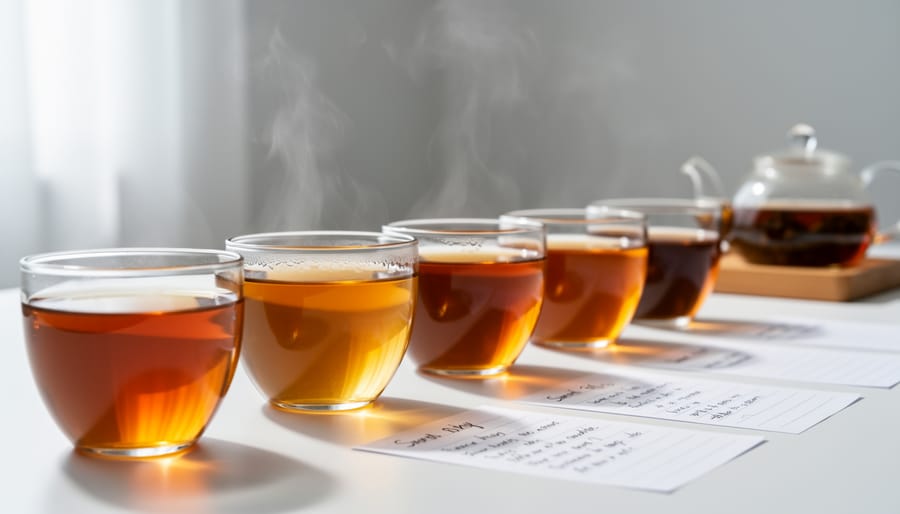
Once you’ve finished brewing your oolong, take a moment to evaluate your results before sipping. This assessment helps you understand whether you’ve extracted the tea optimally and what adjustments might improve your next brew.
Start with the aroma. Properly brewed oolong releases fragrant steam that matches its oxidation level, lighter oolongs offer floral, grassy, or buttery notes, while darker varieties present roasted, woody, or fruity scents. If the aroma seems flat or absent, you’ve likely under-extracted. A harsh, smoky, or burnt smell signals over-extraction.
Examine the liquor color in your cup. Light oolongs should produce pale yellow to golden tones, while darker oolongs range from amber to deep reddish-brown. Cloudiness or muddiness indicates over-brewing or poor water quality. The color should be clear and vibrant, inviting you to taste.
Now taste the tea, letting it coat your entire palate. Optimal brewing yields balanced sweetness, subtle complexity, and a smooth finish with no bitterness. You should detect layers of flavor that evolve as the tea cools. Under-extracted oolong tastes thin, one-dimensional, or grassy without depth. Over-extracted tea becomes astringent, bitter, or metallic, leaving an unpleasant dryness on your tongue.
Pay attention to mouthfeel, the texture and weight of the tea. Well-brewed oolong feels silky or creamy, coating your mouth pleasantly. It should produce a lingering sweetness (what tea experts call “hui gan”) that develops after swallowing.
If your brew seems off, adjust one variable at a time for the next infusion: temperature, steep time, or leaf quantity. Trust your senses, they’re your best guides to perfecting your oolong brewing technique.
Troubleshooting Common Brewing Issues
When your oolong tastes off, the fix is usually simpler than you might think. Here’s how tea masters diagnose and correct the most frequent problems.
Bitter or astringent tea signals water that’s too hot or leaves steeped too long. For your next infusion, drop the temperature by 10-15°F and cut the steep time by 30 seconds. If you’re brewing a lightly oxidized oolong like Tie Guan Yin, aim for the lower end of the temperature range (around 185-195°F) rather than pushing toward boiling. Master Lin from Taiwan notes that bitterness often compounds across infusions, if your third steep tastes harsh, reduce both time and heat immediately rather than pushing through.
Weak, watery flavor means you’ve used too little leaf or too short a steep. Increase your tea-to-water ratio by adding another gram or two of leaves, or extend your infusion by 15-30 seconds. Fresh oolong typically needs 5-7 grams per 100ml for gongfu brewing; if you’re consistently getting thin results, you’re likely under-dosing.
Flat or dull taste despite correct technique often points to stale tea or chlorinated water. Check your leaves, quality oolong should smell fragrant when dry. Switch to filtered or spring water for your next session. The minerals in good water actually help extract flavor compounds that tap water masks.
Inconsistent results between infusions usually stem from timing drift. Set a timer rather than guessing, and keep written notes on what worked. Each oolong variety has its sweet spot, and documenting your successful brews builds reliable technique faster than trial and error alone.
Next Steps in Your Oolong Journey
Now that you’ve mastered the fundamentals of brewing oolong tea, it’s time to expand your horizons. Each oolong variety offers distinct flavors and responds differently to your technique. Start with classic Chinese oolongs like floral Tie Guan Yin from Fujian, which rewards precise temperature control, or the mineral-rich Da Hong Pao from Wuyi Mountain, which handles higher heat beautifully. Taiwanese high-mountain oolongs deliver buttery smoothness, while oxidized varieties like Oriental Beauty develop honey notes that evolve across multiple infusions.
Don’t limit yourself to one brewing method. Alternate between gongfu style for contemplative sessions and western brewing for daily enjoyment, each approach reveals different aspects of the same tea. Keep a tasting journal noting your leaf-to-water ratios, steep times, and flavor impressions; patterns emerge that sharpen your intuition.
Connect with other tea enthusiasts through local tea clubs or online communities where members share tasting notes and brewing discoveries. Consider attending a traditional tea ceremony or visiting tea-producing regions if possible. Many specialty tea shops offer curated tasting flights that let you compare oolongs side-by-side, accelerating your palate development. The more varieties you brew, the more confidently you’ll adapt your technique to each tea’s unique character.
Frequently Asked Questions
Can I reuse oolong tea leaves for multiple infusions?
Quality oolong leaves typically yield 5-8 excellent infusions, with some premium varieties lasting even longer. Simply increase steeping time by 15-30 seconds for each subsequent brew to maintain flavor strength.
Why does my oolong tea taste bitter?
Bitterness usually results from water that’s too hot (above 205°F for most oolongs) or steeping too long. Lighter oxidized oolongs especially need lower temperatures around 185-195°F, while darker varieties can handle 200-205°F.
What’s the difference between gongfu and western brewing for oolong?
Gongfu style uses more leaves (5-7 grams), less water, and shorter steeps (30-60 seconds) for multiple infusions. Western style uses fewer leaves (2-3 grams), more water, and one longer steep (3-4 minutes), making it simpler for daily drinking.
Do different oolong varieties require different brewing approaches?
Absolutely. Light oolongs like Tie Guan Yin need cooler water and shorter steeps, while heavily roasted varieties like traditional Da Hong Pao handle hotter water and longer contact time. Reading your specific tea’s oxidation level guides your technique.
Once you’ve mastered basic brewing, consider exploring Canadian oolong producers who craft exceptional varieties, or expand your palate with Chinese tea blends that incorporate oolong alongside other traditional ingredients. Many tea enthusiasts find that learning to brew oolong properly opens doors to appreciating the broader world of artisan teas, making it worthwhile to try Chinese blends that showcase different processing and flavor profiles.
Brewing oolong tea is both an art and a science, one that rewards your attention with layers of flavor and aroma that unfold across multiple infusions. As you practice these techniques, you’ll develop an intuitive sense for water temperature, timing, and leaf quantity that suits your palate. Each oolong variety offers its own character, from floral high-mountain oolongs to rich, roasted varieties, so there’s always something new to discover. Beyond the sensory pleasure, exploring tea health benefits adds another dimension to your tea journey. We invite you to share your brewing experiences, questions, and favorite oolong discoveries with The Tea Gurus community, together, we’re constantly learning and celebrating the depth of tea culture.