Is Kombucha Halal? What Fermentation Means for Muslim Drinkers
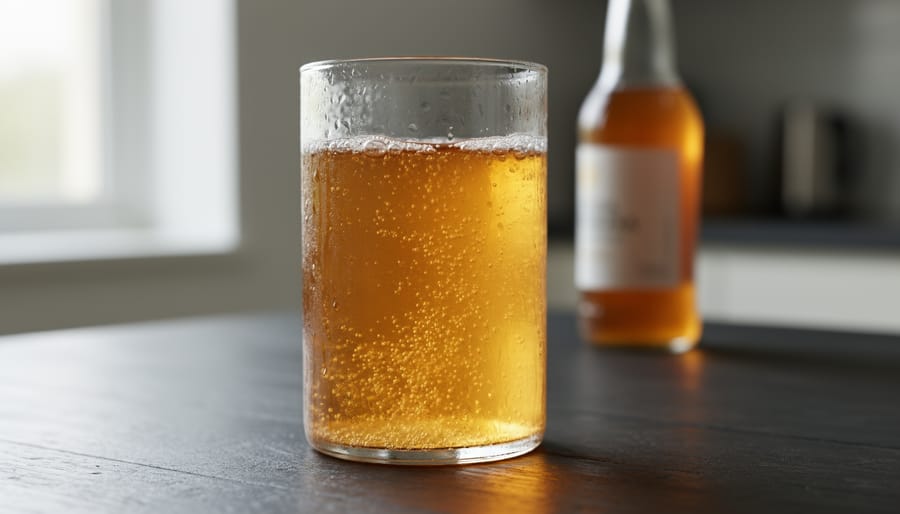
Kombucha can be halal, but not every bottle on the shelf is. The answer turns on four things: what goes into the drink, how it’s fermented, how much alcohol ends up in the finished product, and whether anything alcoholic has been added along the way.
Here’s why the question comes up at all. Kombucha is a fermented tea, made by steeping sweetened tea and leaving it to ferment with a SCOBY, the rubbery culture of bacteria and yeast that does the work. That fermentation naturally produces a small amount of alcohol. It’s the same quiet chemistry that gives kombucha its tang and gentle fizz, and it’s exactly what makes careful Muslim drinkers pause before pouring a glass.
If you’re sorting out what’s in your own glass, you’re not alone. Brands are starting to speak directly to this audience too. OMbucha, founded in 2017 in Wilmslow in the northwest of England, markets specifically to the British Muslim community. This guide walks through what kombucha actually is, what makes a product eligible, what you’re entitled to ask of a brewer, and where to turn for a trustworthy ruling.
What Kombucha Is and Why Its Halal Status Isn’t Automatic
How a SCOBY Turns Sweet Tea Into Kombucha
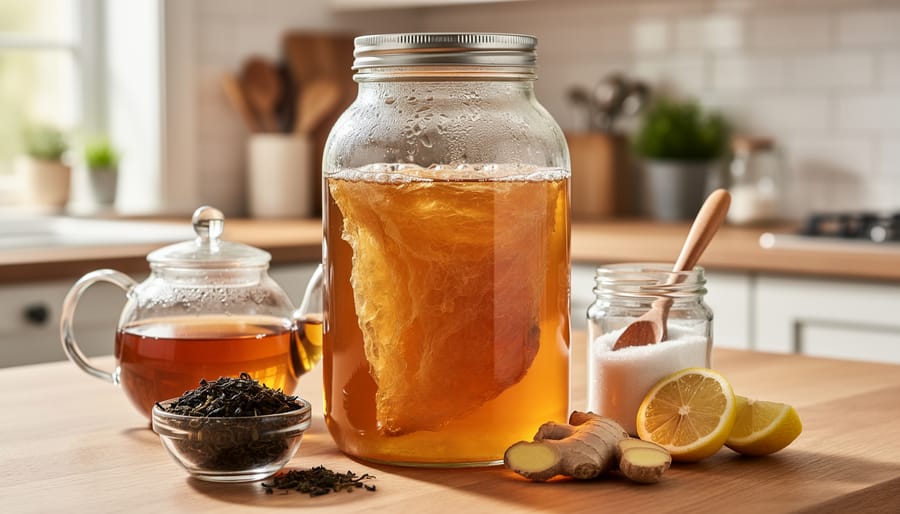
Kombucha starts as ordinary sweet tea. Brew a pot of black or green tea, stir in sugar, let it cool, then add a SCOBY and a splash of starter liquid from a previous batch. The SCOBY, a symbiotic culture of bacteria and yeast, floats on top like a pale, rubbery pancake and gets to work in a warm, quiet corner of the kitchen.
The yeast goes first, feeding on the sugar and producing ethanol produced by fermentation. The bacteria then turn much of that alcohol into organic acids, which is where the bright, vinegar-like tang comes from. Carbon dioxide gives the finished drink its gentle sparkle. Because the yeast makes alcohol along the way, a small amount can remain in the glass, and that trace amount is the root of the halal question.
If you’d like to see the process up close, you can make kombucha at home and watch the transformation yourself. And for a deeper look at where this tea tradition began, the origin of kombucha is a story worth exploring.
Why Trace Alcohol Raises the Question
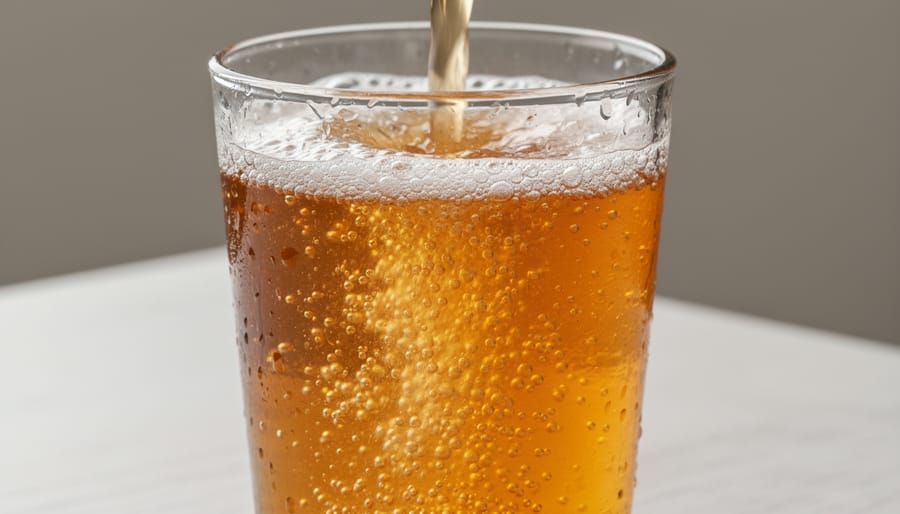
Fermentation is a natural process, and when yeast works on sugar, alcohol is part of the result. That’s why a bottle of kombucha, even a mild and sparkling one, can leave a Muslim drinker pausing at the shelf. The question isn’t whether alcohol exists in the glass at all, but how much, and how it’s judged.
Here’s where opinion genuinely varies. Scholars and certifiers don’t all treat fermented drinks, or the amount of alcohol they contain, in the same way. Many consumers will mention a 0.5% alcohol threshold when asking why some kombucha is seen as halal, and it comes up often in these conversations.
Treat that figure as a starting point for your own enquiry, not a final ruling. The safest move is to ask a scholar or certifier you trust, and to follow the guidance you’re comfortable with.
What Decides Whether a Kombucha Is Halal: Ingredients and Alcohol Content
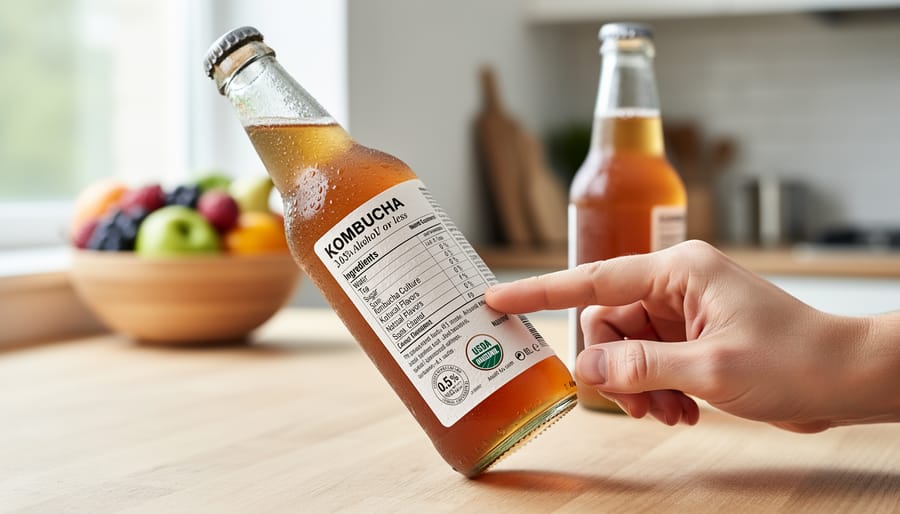
Red Flags on the Label
Picking up a bottle in the shop, a few seconds with the label can save you a lot of doubt. Here are the signs worth noticing.
- Red flag: any alcoholic additive, such as wine, beer, spirit-based flavourings or alcohol-based extracts.
- Red flag: a vague ingredient list that says “natural flavours” without saying more.
- Red flag: no mention of alcohol content anywhere on the bottle or the brand’s website.
- Green flag: a clear, complete ingredient list you can actually read and understand.
- Green flag: a halal certification mark, ideally with the certifier named.
- Green flag: a stated alcohol content that you can check against your own trusted authority.
Remember that a halal-certified product with clearly stated ingredients is the more reliable choice. None of the red flags automatically make a kombucha haram, but each one is a reason to pause and ask. Brands that take their Muslim customers seriously usually answer these questions quickly and plainly. If a producer stays vague about what’s in the bottle, that silence tells you something too.
Your Rights and Responsibilities as a Muslim Kombucha Drinker
As a Muslim kombucha drinker, you hold more of the decision than you might expect. Kombucha is a fermented tea, and fermentation naturally produces a small amount of alcohol, so the label is your first stop. Before you drink, check the ingredients, the alcohol content and whether the bottle carries halal certification. That three-part check is the safest approach, and it takes about half a minute.
A halal-certified kombucha with a clearly stated ingredient list is the more reliable choice, because someone independent has already looked at what’s in the bottle. Certification isn’t the only route, though. A transparent label can also give you what you need, as long as nothing on it, such as an alcoholic additive, raises a flag.
You can reasonably expect brands to meet you halfway. That means plain labelling, ingredient lists you can actually read, and honest answers when you email or message them. If a producer can’t say what’s in a flavouring or won’t discuss alcohol content, treat that silence as information.
Your side of the bargain is to ask. When a label leaves something out, don’t guess. Contact the brand, check with the certifier named on the pack, or put the question to a scholar you trust. And if the answer leaves you unsure, there’s no shame in choosing something simpler, like one of these herbal infusion alternatives while you wait to hear back.
It’s also worth remembering that people in the same community can follow different scholarly opinions on fermented drinks. Your friend’s comfort level may not match yours, and that’s fine. Share what you’ve learned, listen to how others reached their view, and keep the conversation kind. Informed, respectful choice is what holds a tea community together.
Halal Certification and the Brands Speaking to Muslim Drinkers
Halal certification is a third-party signal that someone has checked a product against halal standards, so you aren’t relying on a front-of-pack promise alone. For fermented tea, that matters. A certified product with a clearly stated ingredient list is a more reliable choice, because the two together answer most of the questions this article raises.
Certification won’t replace your own judgement, but it makes the checking quicker. Here’s how the main factors line up:
| Factor | Why it matters for halal status | What to look for on the label |
|---|---|---|
| Alcohol content | Fermentation naturally produces a small amount of alcohol | A stated alcohol level and a halal certification mark |
| Fermentation process | The SCOBY and fermentation shape the final alcohol level | Brand information explaining how it’s made |
| Flavourings and additives | Alcoholic additives or haram ingredients can change the status | A full ingredient list with no alcohol-based extracts |
| Labelling | Missing detail makes verification harder | Clear ingredients and a named certifier |
Some brands are now speaking directly to this audience. OMbucha, founded in 2017 in Wilmslow in the northwest of England, specifically markets to the British Muslim community, which shows how producers are responding to questions Muslim drinkers have long asked.
Across Muslim communities, views on fermented and non-alcoholic tea drinks vary with local custom and scholarly opinion. Many people lean on trusted certification and open conversation with their own scholars, and that’s a perfectly sensible way to approach it.
Where to Get Help: Certifiers, Scholars and Tea Experts
When the label leaves questions unanswered, you don’t have to guess. Kombucha’s halal status turns on its ingredients, its fermentation process, its alcohol content and any alcoholic additives, so the right person to ask depends on what you’re unsure about. Here’s a simple way to match your question to the right source:
- The brand: ask for the full ingredient list, any alcoholic flavourings or extracts, and the finished alcohol content.
- The certifier named on the label: ask what the halal certification actually covers and whether it applies to that specific product.
- Your local imam or a qualified scholar: ask for a personal ruling, since people follow different scholarly opinions on fermented drinks.
- Community halal organisations and fellow drinkers: ask which products others trust and why.
Start with the producer. A transparent brand will happily answer questions about what goes into the bottle, and a halal-certified kombucha with a clearly stated ingredient list is generally the more dependable choice. If a company dodges simple questions about alcohol or additives, that tells you something too.
For rulings on fermented drinks themselves, a knowledgeable imam or scholar you already trust is the right person. Bring the specifics, such as the ingredient list and the alcohol figure, so the conversation stays practical.
We’d also love to hear from tea experts and Muslim tea enthusiasts about how fermented teas are approached in different tea cultures. A short insight from someone with that lived perspective would be a real gift to this community, so if that’s you, get in touch.
Is Kombucha Halal? Your Questions Answered
Short answers help here, because the debate around kombucha is full of nuance. Here are the questions Muslim drinkers ask most often.
Is kombucha halal or haram?
It depends on the product. Kombucha can be halal, but not every bottle automatically is, since the answer rests on its ingredients, fermentation process, alcohol content and any haram or alcoholic additives.
Can Muslims drink kombucha?
Many can, provided they check the label first. The safest approach is to look at the ingredients, the alcohol content and any halal certification before drinking, and to follow the guidance of a scholar or authority you trust.
Is kombucha alcoholic?
Traditional kombucha is made by fermenting sweetened tea with a SCOBY, which naturally produces a small amount of alcohol along the way. That trace amount is exactly why the halal question comes up.
Why do some people see kombucha under 0.5% alcohol as halal?
Some consumers and certifiers refer to a figure below 0.5% when judging fermented drinks, though scholars approach alcohol thresholds differently. Treat it as a question to verify with your own trusted authority rather than a universal rule.
What ingredients affect kombucha’s halal status?
Beyond the tea and sugar, watch for flavourings, extracts and any alcoholic additives. A halal-certified product with a clearly stated ingredient list is described as the more reliable choice.
If you’re curious about brewing your own tea at home, the same attention to what goes into the cup applies there too. Our guide to tea prep basics is a good place to start understanding how tea behaves before it ever ferments.
So, is kombucha halal? It can be, but not automatically. The answer comes down to what’s in the bottle: the ingredients, the fermentation process, the alcohol content and whether any alcoholic additives sneak in. That’s why the safest habit is simple. Read the label, check the alcohol content, and look for halal certification before you pour.
Once you know what to look for, you can enjoy that tangy, lightly fizzy sip with real confidence. Fermentation is one of tea’s oldest and most fascinating stories, and there’s no reason to approach it with worry rather than curiosity.
We’d love to hear from you. Have you found a certified kombucha you trust, or a question you’re still turning over? Share it with the Tea Gurus community, because your experience helps the next reader. And if you’re curious, there’s a whole world of non-alcoholic tea drinks waiting, from cooling iced infusions to spiced chais.