
How to Find the Right Oolong Tea Brewing Temperature for Every Style
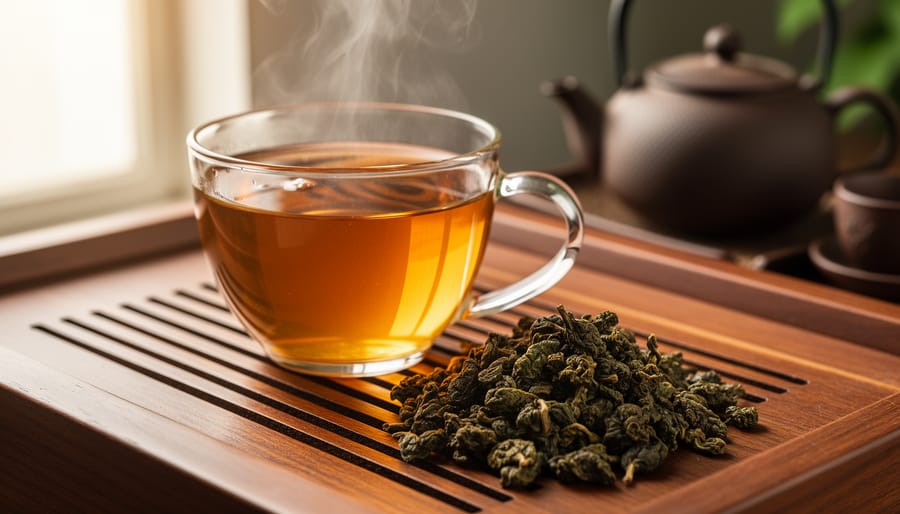
Oolong tea reveals its full character when brewed between 185°F and 205°F (85°C to 96°C), with the exact temperature depending on oxidation level: lighter oolongs thrive at the cooler end of this range, while darker, heavily oxidized varieties demand hotter water. This 20-degree window might seem narrow, but it’s the difference between a delicate floral cup and a bold, toasty brew that lingers on your palate.
Temperature precision matters because oolong leaves are partially oxidized, sitting between green and black teas in processing. Too cool, and you’ll extract a thin, grassy liquor that misses the tea’s complexity. Too hot, and bitterness floods the cup, masking the nuanced sweetness and aromatics that make oolong special. Master tea blenders in Taiwan and Fujian have refined these temperature guidelines over generations, observing how heat interacts with the tightly rolled or twisted leaves that define this category.
Getting temperature right transforms your brewing. A reliable thermometer, temperature-controlled kettle, or even the visual cues of water at different heat levels will help you master brewing oolong at home. Whether you’re steeping a jade-green Tie Guan Yin or a deep amber Da Hong Pao, understanding how temperature unlocks flavor gives you control over every infusion.
Why Temperature Is Critical for Oolong Tea
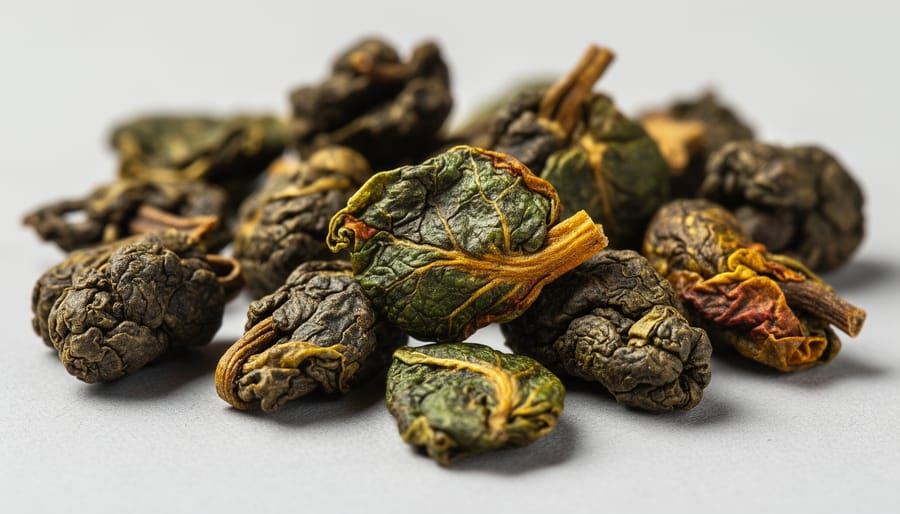
Oolong tea’s unique character stems from its partial oxidation, which typically ranges from 10% to 70%, positioning it squarely between unoxidized green tea and fully oxidized black tea. This middle ground creates a complex leaf structure where some cells remain intact while others have broken down during processing, making oolong extraordinarily sensitive to brewing temperature. When you apply heat to these leaves, you’re essentially activating different compounds at different rates.
Water that’s too hot will extract bitter tannins and astringent compounds too quickly, overwhelming the delicate floral and fruity notes that make oolong special. Conversely, water that’s too cool fails to unlock the full range of aromatic compounds, leaving you with a flat, underwhelming cup that hints at the tea’s potential without delivering it. The sweet spot allows the complex polyphenols to unfold gradually, releasing layers of flavor from the first honeyed notes through to deeper, more mineral-rich undertones.
The oxidation level directly influences your temperature target. Lightly oxidized oolongs, which retain more of their green tea characteristics, need gentler heat to preserve their fresh, floral qualities. As oxidation increases, the leaf structure becomes more robust and can handle higher temperatures that bring out roasted, caramelized notes without turning bitter. This is why a jade oolong and a heavily roasted variety demand different approaches despite being the same tea category.
Understanding this relationship between oxidation and temperature gives you control over the brewing process rather than leaving it to chance.
What You Need to Brew Oolong at the Right Temperature
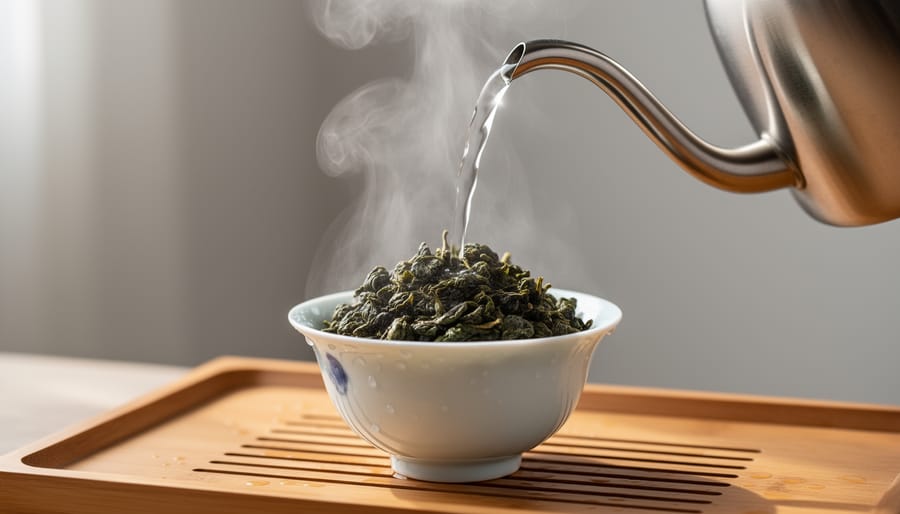
Getting oolong right starts with having the proper gear on hand. You don’t need an elaborate setup, but a few key items make controlling temperature, and thus flavor, much easier.
The Essential Toolkit
Here’s what you’ll want to gather before you start:
- Thermometer (digital or analog), Takes the guesswork out of temperature, especially while you’re learning what different heat levels look like
- Variable-temperature kettle or stovetop kettle, Electric models with preset temps offer convenience; a regular kettle works fine if you monitor it closely
- Teapot or gaiwan, Holds heat differently than a mug and gives you better control over steeping time and temperature retention
- Quality oolong tea, Fresh, well-stored leaves respond predictably to temperature; stale tea won’t brew well no matter what you do
- Filtered water, Removes chlorine and minerals that can interfere with flavor and skew how temperature affects extraction
- Timer, Tracks your steep precisely, which matters because even 30 seconds can shift the profile when you’re working at specific temperatures
Each piece serves a purpose beyond mere convenience. A thermometer, for instance, teaches you what 195°F actually looks like, the size of the bubbles, the sound of the water, so eventually you can gauge temperature by sight and sound. A gaiwan or small teapot retains heat more consistently than a large mug, meaning your leaves stay in their ideal range throughout the steep. Filtered water matters because tap water’s mineral content can raise the boiling point slightly and add off-flavors that temperature alone won’t fix.
You can start simple and add tools as you go, but these basics give you real control over the process.
Temperature Guidelines by Oolong Type
Not all oolong teas want the same heat. The oxidation level, which can range from 10% to 80%, dictates how much temperature the leaves can handle before the flavors turn harsh or underwhelming.
Light Oolongs (185-195°F / 85-90°C)
Lightly oxidized oolongs, typically 10-30% oxidized, thrive at the cooler end of the spectrum. These teas showcase delicate floral and green vegetal notes that scorch easily. Tie Guan Yin from Anxi, with its orchid fragrance and buttery texture, peaks around 185-190°F. Baozhong from Taiwan, one of the lightest oolongs available, does well at the same range. Master tea blender James Chen notes that pushing past 195°F on these varieties “flattens the floral complexity into a one-dimensional grassy taste.”
Medium Oolongs (190-200°F / 88-93°C)
Medium oxidation, roughly 30-50%, brings deeper fruit tones and a richer body that can take slightly hotter water. Dong Ding, a classic Taiwanese oolong with stone-fruit sweetness and toasted notes, performs beautifully at 195°F. Milk Oolong (Jin Xuan), despite its creamy reputation, sits comfortably in this range as well. The extra heat coaxes out caramel undertones without overwhelming the tea’s natural sweetness.
Dark and Roasted Oolongs (195-205°F / 90-96°C)
Heavily oxidized or roasted oolongs, 60% and above, demand the highest temperatures to unlock their full character. Da Hong Pao, the legendary Wuyi rock tea, needs 200-205°F to release its mineral depth, roasted grain notes, and lingering sweetness. Oriental Beauty (Bai Hao), oxidized up to 70%, also thrives at the upper end. Tea educator Lin Wei explains that “roasted oolongs have tighter leaves and denser flavors; lower temperatures leave them muted and flat.”
When in doubt, start at the lower end of your tea’s range and adjust upward in your second or third infusion.
Common Temperature Mistakes to Avoid
Even experienced tea drinkers sometimes struggle with oolong because the temperature window is narrower than it seems. Overheating your water is the most frequent error, anything above 205°F will scorch lighter oolongs, pulling harsh tannins and bitterness from the leaves while destroying the delicate floral aromatics that make teas like Baozhong or Milk Oolong special. You’ll taste astringency that coats your tongue rather than the clean, sweet finish a proper steep delivers.
The opposite problem, water that’s too cool, leaves you with weak, grassy tea that tastes more like flavored water than a proper infusion. If you’re following oolong infusion steps but the liquor looks pale and tastes flat, your water likely didn’t reach 185°F. This is especially common with the boil-and-cool method if you wait too long before pouring.
Reboiling the same water multiple times changes its chemistry, dissolved oxygen escapes, minerals concentrate, and the resulting tea tastes dull and heavy. Fresh water for each session gives you cleaner flavors. And if you live above 3,000 feet, remember that water boils at lower temperatures; your “boiling” kettle might only reach 200°F, which works fine for darker oolongs but undershoots the mark for styles that need precise heat.
Step-by-Step: Achieving the Perfect Brewing Temperature
Method 1: Using a Variable-Temperature Kettle
Variable-temperature kettles eliminate guesswork entirely. Set your kettle to your target temperature, say, 195°F for a medium-oxidized Dong Ding, and press start. The kettle heats the water and holds it at that precise degree until you’re ready to pour.
Most models let you adjust in five-degree increments, which gives you room to fine-tune based on your tea’s specific character. If your first steep tastes sharp, dial down five degrees for the next round. Keep a note of what works for each oolong in your collection, and you’ll develop a personal temperature map over time.
The hold function is particularly useful when you’re brewing multiple infusions. Instead of reheating between steeps, the kettle maintains your chosen temperature, so your second and third pours stay consistent without babysitting the stove.
Method 2: Boil and Cool Technique
If you don’t have a thermometer or variable-temperature kettle, the boil-and-cool method works reliably. Bring your water to a full rolling boil, then remove it from heat and let it cool for the appropriate time. For light oolongs, wait 3-4 minutes after boiling. Medium oolongs need about 2-3 minutes of cooling. Dark, roasted varieties require only 1-2 minutes since they handle higher temperatures well.
The cooling time varies slightly based on your kettle’s material and room temperature, so you’ll refine your timing through practice. Pour a small test amount first to gauge if the water feels right against the back of your hand from a safe distance. Once you’ve dialed in your timing, this technique becomes second nature and delivers consistent results without any special equipment.
Method 3: Using a Thermometer
For absolute precision, a thermometer removes all guesswork. Bring your water to a full boil, then insert a digital or analog thermometer and watch the temperature drop. When it reaches your target range, say, 190°F for a medium oolong, remove the thermometer and pour immediately.
This method gives you repeatable results every time. You’ll start recognizing how long it takes water to cool from boiling to your preferred temperature, which helps you anticipate the process. Clip-on thermometers work well for kettles, while instant-read versions suit smaller vessels. The trade-off is extra equipment, but if you’re serious about dialing in your oolong’s flavor profile, a thermometer pays for itself in consistency alone.
How to Tell If You’ve Got It Right
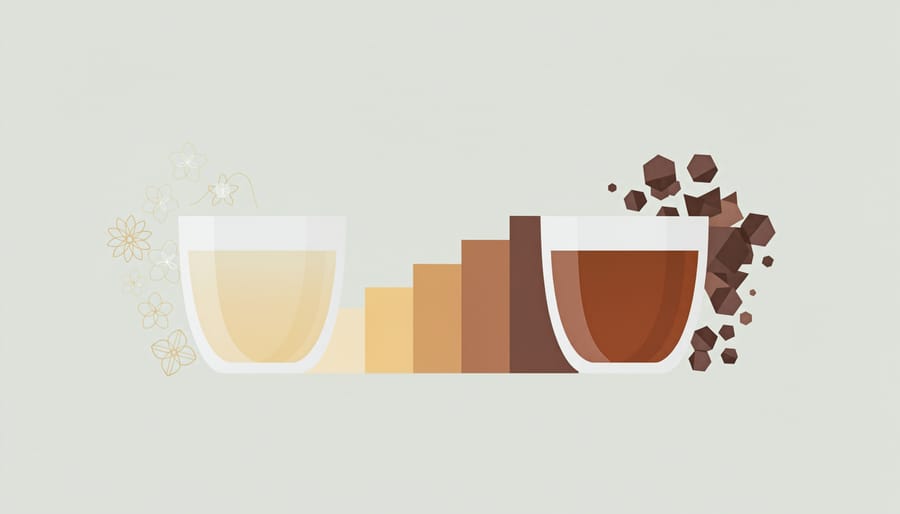
The clearest signal you’ve nailed the temperature is the taste. A properly brewed oolong should taste balanced, neither sharp and bitter nor flat and grassy. You’ll notice a natural sweetness that lingers, layered with the tea’s characteristic notes. Light oolongs reveal floral and fruity flavors with a silky texture, while darker varieties show roasted, toasty depth without harshness.
Check the liquor’s color. Light oolongs typically produce pale gold to amber hues; medium oolongs range from golden to copper; dark oolongs brew a deeper amber or reddish-brown. If your tea looks muddy or excessively dark for its type, the water was likely too hot.
The aroma offers another checkpoint. Properly heated water releases fragrant, inviting scents, orchid or lilac for lighter styles, caramel or roasted nuts for darker ones. Overly hot water creates a sharp, astringent smell, while cool water yields weak, barely-there fragrance.
Pay attention to mouthfeel. Oolong brewed at the right temperature feels smooth and coating, not dry or puckering. If you can brew without a thermometer and achieve this balance, you’re on track.
For subsequent infusions, adjust slightly based on your first steep. If the initial cup tasted weak, raise the temperature by five degrees. If it was bitter, drop it by the same margin. Oolong rewards this attentiveness across multiple steepings.
Questions Tea Lovers Ask About Oolong Brewing Temperature
The temperature questions that come up most often reveal just how much tea lovers care about getting their oolong brewing right. Here’s what experienced brewers want to know.
Should I adjust the temperature for multiple infusions?
Yes, slightly increase the temperature by 5-10°F for each subsequent steep. As the leaves unfold and release their initial compounds, hotter water helps extract deeper flavors from the second and third infusions without turning bitter.
Does preheating my teapot really matter?
It makes a noticeable difference, especially with lighter oolongs. A cold teapot can drop your water temperature by 10-15°F instantly, throwing off your carefully measured brewing temperature and resulting in weak, underdeveloped flavor.
Can I brew good oolong without a thermometer?
Absolutely. Watch for visual cues: small bubbles forming on the bottom of the kettle indicates about 160-170°F, string-of-pearls bubbles means 180-190°F, and a rolling boil is 212°F. Let boiling water cool for 30-60 seconds to reach the oolong sweet spot.
Is microwaved water acceptable for oolong?
While not ideal, microwaved water works if you have no other option. The main issue is uneven heating, which makes temperature control harder. If you microwave, stir the water before checking temperature and brewing.
How do I maintain proper temperature while traveling?
Pack a small digital thermometer and request hot water at your destination. Most hotel rooms have coffee makers that boil water, or you can ask restaurants for plain hot water. Let it cool to your target range, checking with your thermometer.
The thread connecting these questions is control. Whether you’re working with basic equipment at home or improvising on the road, understanding the principles behind temperature management lets you adapt and still produce a satisfying cup. Trust your senses, stay flexible with your methods, and remember that even experienced tea masters sometimes eyeball their temperatures based on years of practice rather than precise measurement.