7 Legendary Chinese Herbal Tea Blends Every Tea Lover Should Try, Curated
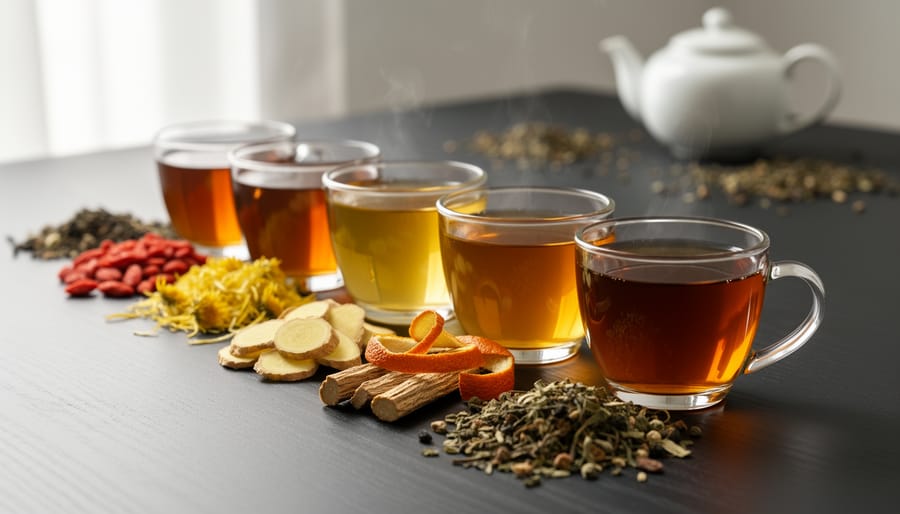
Chinese herbal tea blends represent centuries of medicinal wisdom distilled into carefully balanced formulas that treat the body as an interconnected system rather than isolated symptoms. These legendary combinations, born from Traditional Chinese Medicine principles dating back thousands of years, pair botanicals based on their energetic properties to restore harmony between yin and yang, cool internal heat, or strengthen vital energy. Unlike Western herbal teas that often spotlight single ingredients, Chinese blends achieve their therapeutic effects through precise ingredient ratios that enhance benefits while minimizing potential side effects.
What makes these blends particularly compelling in 2026 is their accessibility. The same formulas prescribed by imperial court physicians now appear in specialty tea shops worldwide, allowing anyone to experience remedies once reserved for Chinese nobility. You’ll encounter blends designed for everything from soothing sore throats to supporting liver function, each with distinct flavor profiles ranging from sweet and floral to earthy and bitter.
The seven blends explored here represent the most renowned and widely available formulations, each with documented historical use and recognizable cultural significance. They offer entry points into a vast tradition where tea drinking transcends simple refreshment to become a daily health practice. Understanding these classics provides both practical guidance for selecting your next cup and deeper appreciation for how Chinese culture has long viewed food and medicine as inseparable.
How We Curated This Collection
We built this collection around five core criteria to ensure you discover blends that matter both historically and practically.
First, each tea needed proven historical significancethese aren’t recent inventions but formulations passed down through generations, often with origin stories woven into Chinese cultural memory. Second, we looked for enduring popularity: blends that grandmothers in Beijing and modern tea shops in Shanghai still prepare regularly, proving their staying power.
Documented traditional uses formed our third filter. We focused on teas with clear roles in Traditional Chinese Medicine and everyday wellness practices, avoiding obscure regional variations that lack broader context. Fourth, availability mattered, you can actually find these ingredients through reputable tea merchants and Chinese grocery stores, making them accessible for Western tea enthusiasts.
Finally, we consulted with three TCM practitioners and two traditional tea masters in Guangdong and Fujian provinces. Their insights helped us understand not just what these blends contain, but why certain combinations became legendary while countless others faded into obscurity. Their guidance shaped both our selections and how we present each blend’s purpose.
1. Chrysanthemum Tea (菊花茶), The Cooling Classic
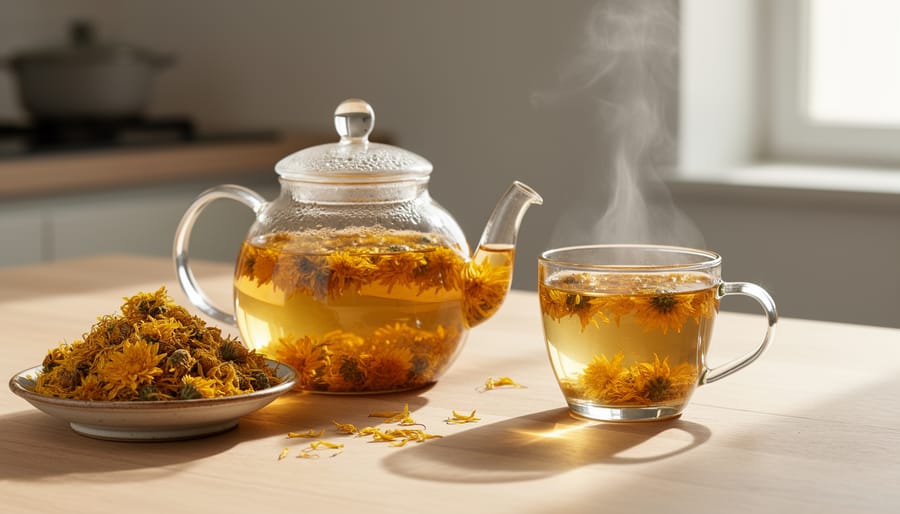
Chrysanthemum tea stands as one of China’s most beloved herbal infusions, with a history stretching back over a thousand years to the Song Dynasty. The dried golden or white flowers produce a pale, sunlit brew that’s become synonymous with summer refreshment across China. Unlike true tea from the Camellia sinensis plant, chrysanthemum creates a naturally caffeine-free tisane prized for its gentle cooling properties in Traditional Chinese Medicine.
The tea’s legendary status stems from its association with balance and clarity. Ancient texts describe chrysanthemum as a flower that clears heat and calms the spirit, making it a go-to remedy during sweltering months when the body needs to release excess warmth. Chinese families have passed down the practice of brewing chrysanthemum tea during summer festivals and hot afternoons, often sweetened with rock sugar or paired with goji berries for added depth.
Preparation couldn’t be simpler. Place five to eight dried chrysanthemum flowers in a glass teapot or cup, pour hot water over them, and watch the blooms unfurl and dance. The flowers need space to expand fully, revealing their delicate petals.
- Flavor profile: sweet floral opening with honey notes, finishing with a pleasant, mild bitterness
- Traditional uses: summer heat relief, soothing dry eyes, supporting respiratory comfort
- Optimal brewing: 195°F water, steep 3-5 minutes for best flavor balance
The resulting infusion tastes like drinking liquid sunshine, floral without being perfumed, subtly sweet with an herbal edge that keeps it interesting. That slight bitterness at the finish is considered essential, a sign of quality chrysanthemum rather than a flaw. You’ll find this tea served everywhere from bustling dim sum restaurants to quiet teahouses, always presented in clear glass to showcase the flowers suspended in golden liquid. It’s the perfect introduction to Chinese herbal teas for newcomers, approachable yet authentically traditional.
2. Eight Treasure Tea (八宝茶), The Imperial Blend
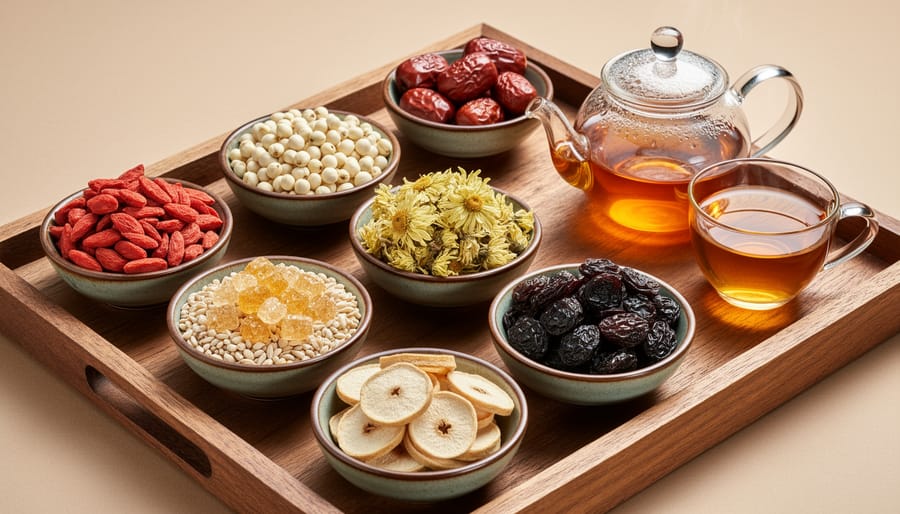
Eight Treasure Tea stands apart as perhaps the most visually stunning and ingredient-rich blend in Chinese tea tradition. Originating in the Ningxia Hui Autonomous Region centuries ago, this elaborate infusion earned its way into imperial courts where it was served to honor distinguished guests. The “eight treasures” refer to the traditional eight ingredients, though regional variations may include more.
A classic Eight Treasure Tea typically combines goji berries (枸杞), red dates (红枣), longan (龙眼), rock sugar, dried chrysanthemum flowers, raisins, walnut kernels, and sesame seeds. Some versions substitute or add rose petals, hawthorn berries, or apricot kernels. Each ingredient contributes both flavor and traditional wellness properties: goji berries for vitality, dates for blood nourishment, longan for calming energy, and chrysanthemum for cooling balance.
The brewing ritual itself becomes a visual feast. When hot water meets the ingredients in a clear glass, you’ll watch jewel-toned berries float, flowers unfurl, and rock sugar dissolve into a rich amber-gold liquid. The aroma is complex yet harmonious, fruity sweetness mingles with floral notes and a subtle nuttiness from the seeds.
The flavor profile leans decidedly sweet and nourishing, with layers revealing themselves as you sip. First comes gentle fruit sweetness from the dates and longan, followed by the subtle floral character of chrysanthemum, finishing with the earthy richness of goji berries. It’s less a tea for contemplation and more a comforting tonic that feels restorative.
Traditionally consumed during colder months or when feeling depleted, Eight Treasure Tea remains popular across northwestern China and is increasingly available in specialty tea shops worldwide, often sold in individual serving packets.
3. Ginger Date Tea (姜枣茶), The Warming Warrior
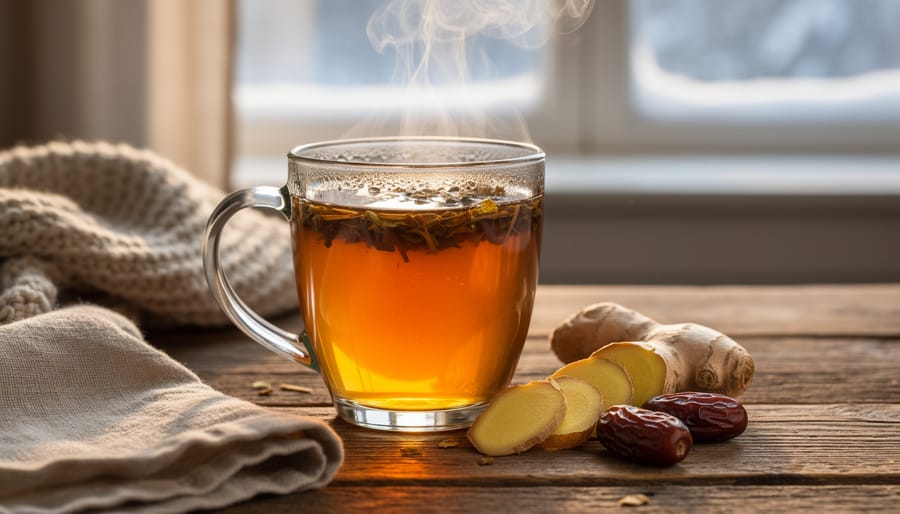
This deceptively simple blend of fresh ginger and red dates (jujubes) has sustained Chinese families through cold winters for centuries, earning its reputation as one of the most accessible yet effective warming remedies in traditional tea culture. Unlike complex multi-ingredient formulations, Ginger Date Tea relies on just two powerhouse ingredients to deliver profound warming effects.
The combination works because each component brings complementary properties. Fresh ginger provides the heat, stimulating circulation and dispelling cold from the body, while red dates add natural sweetness and nourishing qualities that balance ginger’s intensity. In traditional Chinese medicine, this pairing addresses what practitioners call “cold invasion,” making it the go-to choice when you feel a chill settling into your bones or sense the early stages of seasonal discomfort.
Preparation couldn’t be more straightforward. Slice 3-4 pieces of fresh ginger (about thumb-sized) and tear open 5-6 dried red dates to release their sweetness. Simmer both in water for 15-20 minutes rather than simply steeping them. This extended cooking extracts the warming compounds from ginger and draws out the natural sugars and nutrients from the dates. The resulting brew has a golden-amber hue with visible ginger threads and plump date pieces.
The flavor strikes a satisfying balance between sweet and spicy. You’ll taste the dates’ caramel-like sweetness first, followed by ginger’s warm, slightly pungent kick that spreads through your chest and settles in your stomach. Many people drink this blend on empty stomachs in winter mornings or after exposure to cold, damp weather.
4. Luohanguo Tea (罗汉果茶), The Monk Fruit Elixir
Legend holds that a monk in Guangxi province first discovered this remarkable fruit centuries ago, recognizing its extraordinary sweetness and soothing properties. Named for its monastic connection, luohanguo (monk fruit) produces an infusion that’s become legendary for one standout quality: intense natural sweetness with zero calories, making it entirely unique among Chinese herbal teas.
The dried fruit looks like a small brown gourd, and when steeped, it releases a rich amber liquid with notes that hover between caramel, molasses, and brown sugar. This sweetness doesn’t come from sugar but from compounds called mogrosides, which are roughly 200 times sweeter than table sugar yet don’t affect blood glucose levels. It’s why modern wellness circles have embraced monk fruit, though traditional Chinese households have valued it for generations.
In TCM practice, luohanguo tea serves as a go-to remedy for dry coughs, sore throats, and scratchy voices. It clears heat in Chinese medicine while moistening the lungs and throat, making it especially popular during dry winter months or when battling respiratory irritation. Singers and teachers in China often keep a thermos of this tea on hand.
Brewing requires just one-quarter to one-half of a dried fruit, cracked open and steeped in boiling water for 10-15 minutes. The longer it steeps, the deeper the sweetness becomes. You can resteep the same fruit several times, and the flavor remains robust. Some tea drinkers combine it with chrysanthemum or honeysuckle to balance the intense sweetness with floral notes, creating a more complex drinking experience.
5. Honeysuckle Tea (金银花茶), The Summer Protector
The delicate white and gold flowers of honeysuckle (金银花, literally “gold and silver flower”) have earned this herbal tea its legendary status as a summer staple in Chinese households. Its cooling nature made it a go-to remedy during sweltering months, particularly across southern provinces where heat and humidity were constants of daily life.
Traditional Chinese medicine valued honeysuckle for clearing what practitioners called “heat toxins”, conditions manifesting as sore throats, fever, or skin irritations during summer’s peak. Tea masters I’ve consulted describe how families would brew large batches on hot days, drinking it throughout the afternoon to maintain internal balance. Unlike some cooling herbs with harsh, bitter profiles, honeysuckle offers a surprisingly gentle sweetness reminiscent of nectar, with subtle floral notes that don’t overwhelm the palate.
The flavor walks a fine line: mildly sweet with a clean, almost grassy finish that refreshes without cloying. Some detect honey undertones (hence the English name), while others notice a faint earthiness beneath the floral top notes. This subtlety makes it an excellent blending partner, chrysanthemum flowers complement honeysuckle beautifully, creating a more complex cooling tea that’s become nearly as traditional as either herb alone.
Brewing requires only a few dried flower clusters steeped in just-below-boiling water for three to five minutes. The pale golden liquor that results carries the flowers’ delicate perfume without bitterness, even with slightly longer steeping. During summer festivals and family gatherings, chilled honeysuckle tea often appears alongside cooling fruits, embodying the seasonal wisdom of matching food and drink to nature’s rhythms.
6. Wolfberry Chrysanthemum Tea (枸杞菊花茶), The Eye Guardian
This legendary pairing brings together two of Chinese herbal medicine’s most cherished ingredients in a visually stunning, gently sweet infusion that’s earned its reputation as the “eye guardian” blend. You’ll find wolfberry chrysanthemum tea in offices across China, where screen-weary workers brew it throughout the day, and in traditional herbal shops that have sold this combination for centuries.
The blend works on complementary principles. Goji berries (wolfberries) contribute a natural sweetness and subtle earthiness, while chrysanthemum flowers add their characteristic floral brightness and cooling properties. Together, they create a balanced infusion that’s neither too sweet nor too bitter. TCM practitioners have long prescribed this combination specifically for eye strain, dry eyes, and blurred vision, believing the goji nourishes liver blood (which “opens to the eyes” in TCM theory) while chrysanthemum clears heat that can cloud vision.
Brewing this tea becomes a small visual performance. Drop a handful of dried goji berries and three to five chrysanthemum flowers into a glass teapot or cup, add hot water around 90°C, and watch the transformation. The berries plump and bob, releasing ruby tones into the water, while the flowers bloom open, their golden petals creating a sunset-colored infusion. Within three minutes, you have a drink that’s as beautiful as it is functional.
Modern popularity has soared as computer and phone use intensified. Unlike the seasonal blends we’ve covered, this one suits year-round drinking. The goji berries are even edible after steeping, offering a chewy, honey-sweet treat at the bottom of your cup.
7. Five Flower Tea (五花茶), The Detox Blend
Five Flower Tea holds a special place in Cantonese culture, particularly in Guangdong province and Hong Kong, where humid summers drive locals to seek cooling remedies. This traditional blend typically combines five flowering herbs, though the exact composition varies by family recipe and herbal shop. Common ingredients include chrysanthemum, honeysuckle, kapok flower, frangipani, and sophora flower, each chosen for its cooling properties according to traditional Chinese medicine principles.
The tea’s primary reputation centers on clearing heat and dampness from the body, a concept deeply rooted in TCM that addresses the heavy, sluggish feeling common in hot, humid climates. Cantonese families brew large batches during summer months, serving it chilled or at room temperature as a preventative measure against heat-related discomfort. You’ll find this blend sold pre-packaged in herbal shops throughout southern China, sometimes labeled as “cooling tea” for visitors unfamiliar with the traditional name.
The flavor profile walks a delicate line between medicinal and pleasant. Expect a gentle bitterness from the chrysanthemum and sophora, balanced by the subtle sweetness of honeysuckle and the earthy notes from kapok. Some commercial versions add a touch of rock sugar to soften the edges, though purists prefer the unadulterated herbal character.
Brewing requires a generous handful of the dried flower mixture steeped in boiling water for 15-20 minutes, allowing the medicinal compounds to fully extract. The resulting amber-colored infusion can be consumed warm or stored in the refrigerator for up to three days, making it practical for daily summer drinking.
Common Questions About Chinese Herbal Tea Blends
Traditional Chinese herbal teas raise practical questions for newcomers and experienced drinkers alike. These blends follow different rules than standard tea, and understanding the nuances helps you get the most from each cup while respecting the cultural knowledge behind these preparations.
How long should I steep Chinese herbal tea blends?
Most herbal blends need 5-10 minutes of steeping in freshly boiled water, longer than traditional tea leaves. Ingredients like dried fruits and flowers need time to release their properties, and unlike true tea, herbal infusions don’t become unpleasantly bitter with extended steeping.
Do these herbal blends contain caffeine?
Pure herbal blends made only from flowers, fruits, and herbs contain no caffeine. However, some traditional formulations combine herbal ingredients with actual tea leaves, so check the ingredient list if caffeine sensitivity is a concern.
Where can I find authentic Chinese herbal tea ingredients?
Chinese medicine shops and specialty tea stores stock quality dried herbs, while many Asian supermarkets carry common ingredients like chrysanthemum and goji berries. Online retailers specializing in Chinese tea offer pre-blended options and individual ingredients, though buying from established vendors ensures freshness and proper sourcing.
Can I drink these herbal teas every day?
Many blends are gentle enough for daily enjoyment, but Chinese medicine views herbs as having specific properties that should match your constitution and needs. Rotating between different blends or consulting a TCM practitioner makes sense if you’re addressing specific health concerns rather than simply enjoying the flavors.
Storage matters more than many realize. Keep dried herbs and flowers in airtight containers away from light, heat, and moisture. Properly stored ingredients maintain their potency for months, though vibrant colors and strong aromas indicate freshness. If you’re taking medications or managing health conditions, talk with your doctor before incorporating herbal blends into your routine, particularly complex formulations or daily consumption. These legendary teas carry centuries of traditional use, but they’re still active botanicals that deserve thoughtful integration into your wellness practices.
These seven legendary Chinese herbal tea blends represent centuries of accumulated wisdom, each one a carefully balanced formula designed to support wellness while delighting the senses. What makes them truly special isn’t just their historical significance or cultural weight, it’s the underlying philosophy of balance that guides every combination. In Chinese tea culture, herbs aren’t randomly thrown together; they’re paired with intention, considering their complementary properties, flavor harmonies, and how they work together to create something greater than the sum of their parts.
You don’t need to master all seven blends at once. Start with what speaks to you, perhaps the cooling elegance of chrysanthemum if you run warm, or the comforting warmth of ginger date tea if cold weather leaves you chilled. Each blend offers a different entry point into the rich world of Chinese herbal tea traditions, and your journey through them can unfold gradually, deepening your appreciation with each cup. As you explore these legendary combinations, you’ll discover that Chinese herbal teas offer more than just flavor; they’re an invitation to slow down, observe, and engage with an ancient practice that honors both tradition and the individual needs of each person who brews them.