
How AI Is Breaking Down Barriers for Small Tea Farmers Who Need Funding
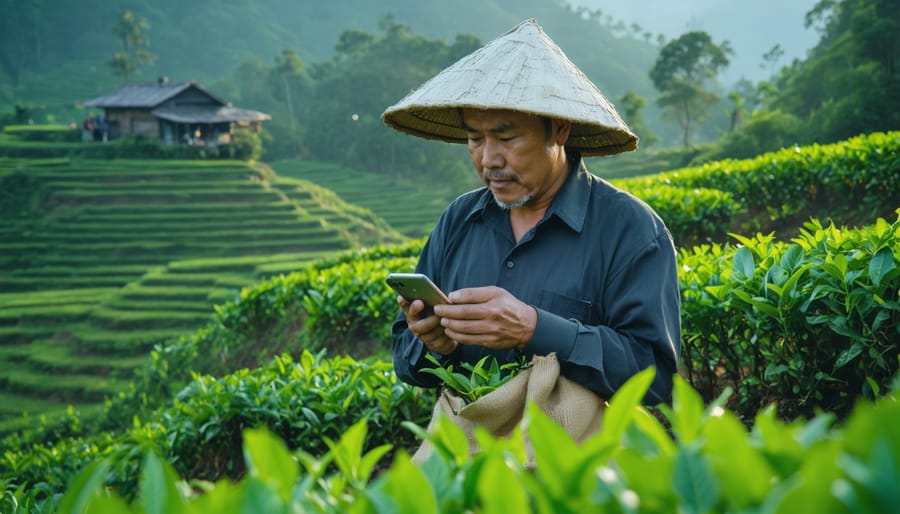
Every time you steep a perfect cup of tea, consider the small-scale farmer who cultivated those leaves—often working without access to the capital needed to invest in quality equipment, sustainable practices, or even next season’s planting. Traditional banks rarely serve these rural producers, leaving them vulnerable to predatory lenders charging interest rates that can exceed 100% annually. This financial exclusion doesn’t just harm farmers; it compromises the quality of tea reaching your cup and threatens the cultural traditions surrounding tea cultivation that have existed for millennia.
Artificial intelligence is now bridging this gap. Small-scale tea farmers can borrow responsibly with RadCred and similar AI-powered services to connect directly with ethical lenders through sophisticated microloan matching systems. These platforms analyze creditworthiness using alternative data—seasonal harvest patterns, cooperative membership, weather conditions, and mobile payment histories—rather than traditional credit scores most small-scale producers lack. The technology assesses risk in seconds, matches farmers with appropriate loan products, and facilitates transactions through mobile devices, even in remote growing regions.
The impact extends beyond individual financial transactions. When farmers can access responsible financing, they invest in organic certification, purchase processing equipment that preserves delicate flavor compounds, and implement sustainable farming techniques that protect soil health for future generations. This technological innovation transforms the entire supply chain, ensuring that the exceptional tea cultures we celebrate as enthusiasts can thrive economically while maintaining their authentic character and environmental stewardship.
The Funding Gap That Threatens Tea Farmers
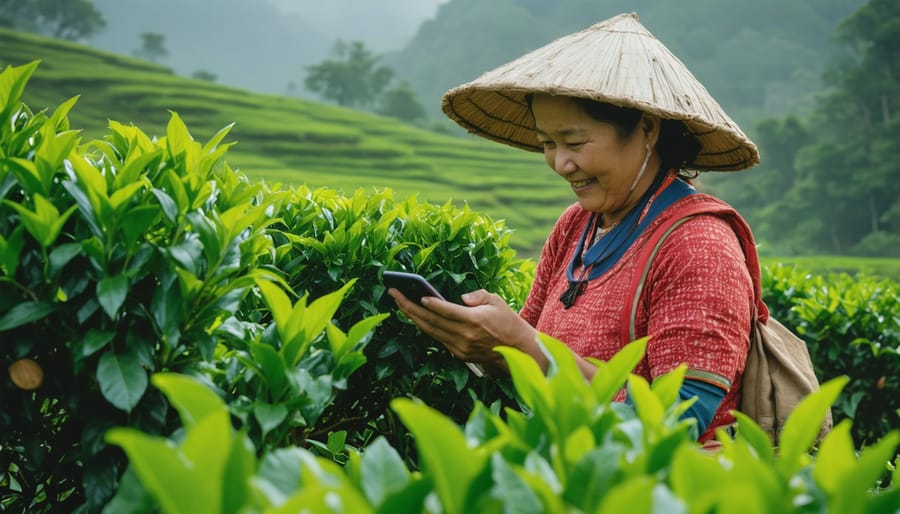
Why Traditional Banks Turn Away Tea Farmers
Behind every exceptional cup of tea lies a farmer’s dedication—yet these crucial custodians of our beloved beverage face surprising obstacles when seeking financial support. Traditional banks consistently turn away tea farmers, creating barriers that ripple through the entire supply chain, ultimately affecting the quality and availability of the teas we cherish.
The core issue begins with loan size. Tea farmers typically need smaller amounts—perhaps $500 to $5,000—for seasonal expenses like fertilizers, equipment repairs, or worker wages. For banks accustomed to processing large commercial loans, these “micro” amounts simply aren’t profitable. The administrative costs of processing a $1,000 loan nearly match those of a $100,000 loan, making small farmer financing economically unattractive.
Banks also perceive tea farming as inherently risky. Unlike traditional tea auctions where established estates dominate, smallholder farmers face unpredictable weather, pest challenges, and fluctuating market prices. Without substantial collateral or credit histories, they’re categorized as high-risk borrowers—despite generations of successful farming.
Documentation requirements create another insurmountable hurdle. Many tea farmers in regions like Darjeeling, Assam, or Sri Lanka operate on ancestral land without formal titles, lack detailed financial records, or have limited literacy. Banks require extensive paperwork that’s simply incompatible with their operational reality.
Perhaps most critically, there’s a fundamental mismatch between agricultural cycles and banking terms. Tea harvests follow seasonal patterns, but standard loan repayment schedules demand monthly payments regardless of harvest timing, creating impossible cash flow constraints that set farmers up for default.
What This Means for Your Tea
When small-scale tea farmers lack capital, the tea in your cup suffers directly. Without funding for crucial spring fertilization, plants produce smaller, less aromatic leaves. Processing equipment that breaks down midseason can’t be replaced, forcing farmers to sell their entire harvest as lower-grade commodity tea rather than the premium artisan lots you treasure.
The consequences ripple through your teapot. That Darjeeling first flush loses its delicate muscatel notes when farmers can’t afford selective hand-plucking. Traditional oxidation methods—those time-honored techniques that create complex flavor profiles—get abandoned for faster, cheaper processes when cash flow tightens. Family farms with generations of tea-making knowledge simply shut down, unable to compete without working capital.
Consider this: when a Taiwanese oolong producer can’t purchase charcoal for traditional roasting, or a Yunnan farmer must harvest sheng puerh weeks early to generate quick cash, the unique character of these teas disappears. The diversity and quality that make tea exploration exciting depend on farmers having the resources to maintain their craft. AI-driven microloans are helping preserve these artisan traditions by ensuring farmers can access capital precisely when their tea needs it most—protecting both livelihoods and the exceptional flavors that brought you to specialty tea in the first place.
How AI Microloan Matching Actually Works
The Data That Replaces Credit Scores
For generations, tea farmers like those tending gardens in the hills of Darjeeling or terraced slopes of Fujian have been locked out of traditional banking. Without formal credit scores or collateral, even the most skilled growers couldn’t access the capital they needed. But AI is changing this story by looking at what truly matters—a farmer’s actual relationship with their land and community.
Instead of credit history, these intelligent systems analyze rich alternative data that paints an authentic picture of reliability. Harvest records reveal seasonal patterns and yield consistency over time. Weather data cross-referenced with farming decisions shows how well a grower adapts to challenging conditions—crucial knowledge when climate unpredictability threatens tea quality and livelihoods.
Community reputation becomes quantifiable through digital networks where farmers rate cooperative partners and buyers provide feedback. Mobile payment history, increasingly common even in remote growing regions, demonstrates financial responsibility through consistent small transactions. The AI also evaluates farming practices: Does the farmer invest in soil health? Do they practice proper pruning techniques? Are they experimenting with organic methods or specialty cultivars?
Tea experts we’ve consulted emphasize how these data points reflect generations of wisdom. A farmer maintaining heirloom tea varieties or preserving traditional processing methods isn’t just culturally valuable—they’re demonstrating long-term thinking and dedication. This holistic approach means creditworthiness is measured by the very practices that produce the exceptional teas we cherish in our cups, creating a system that finally recognizes true agricultural expertise.
From Application to Approval in Days, Not Months
For tea farmers, timing is everything. Miss the narrow window for fertilizer application before the monsoon rains, and the entire season’s crop suffers. Yet traditional microloan applications often take two to three months—long after that critical moment has passed.
AI-powered matching platforms are revolutionizing this timeline. Using just a smartphone, farmers can now complete applications in their local language within minutes. The mobile-first design accommodates varying literacy levels, with voice-enabled features and visual guides making the process accessible even in remote tea-growing regions of Assam, Sri Lanka, or Kenya.
Behind the scenes, algorithms assess creditworthiness using alternative data—mobile phone payment histories, cooperative membership records, and even satellite imagery of tea gardens—rather than traditional credit scores that many smallholder farmers lack. What once required weeks of paperwork review now happens in hours.
Tea farmer Lakshmi from Nilgiris district shares her experience: “I applied on Tuesday evening after finishing the day’s plucking. By Thursday morning, the funds were in my account—just in time to purchase organic fertilizer for the pre-monsoon application.”
This synchronization between financial access and agricultural cycles means farmers can invest precisely when their gardens need it most. The result? Healthier bushes producing higher-quality leaves, which ultimately reach your teacup as more flavorful, sustainably-grown tea. It’s a digital bridge connecting ancient agricultural wisdom with modern financial innovation.
Real Tea Farmers, Real Results
A Darjeeling Estate’s Equipment Upgrade
In the misty hills of Darjeeling’s Singbulli estate, a small family-owned tea garden faced a familiar challenge: their aging processing equipment couldn’t preserve the delicate aromatics that make their premium first flush teas so prized. Traditional bank loans required collateral the family didn’t have, leaving them watching their finest spring harvests lose value.
Then proprietor Rajesh Sharma discovered an AI-powered microloan platform designed specifically for tea producers. The system analyzed his garden’s production history, seasonal cash flow patterns, and market demand for Darjeeling first flush. Within weeks, he secured funding for a temperature-controlled withering system and precision roller.
The transformation was remarkable. “Our 2023 first flush had the muscatel notes and floral brightness that buyers seek,” Rajesh shares. “The AI understood our unique harvest cycle—repayment aligned with our peak selling season rather than arbitrary monthly deadlines.”
The estate’s tea now commands 40% higher prices at auction, and Rajesh has become an advocate, helping neighboring small producers navigate the platform. His story demonstrates how targeted financial technology can preserve both livelihoods and the exceptional quality that tea lovers treasure.
Kenyan Smallholders Accessing Organic Certification
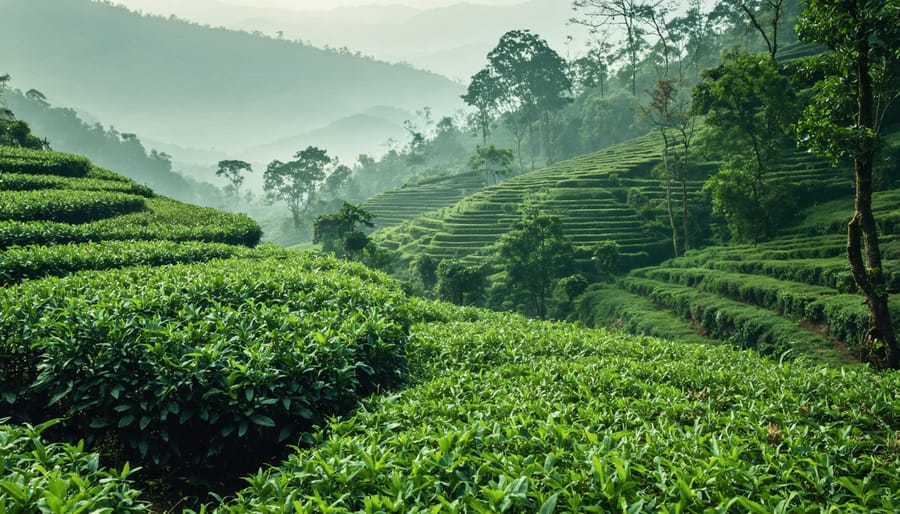
In the lush highlands of Nyeri County, the Gatomboya Tea Cooperative discovered how AI-driven microloan matching could transform their aspirations into reality. These Kenyan tea farmers had long practiced sustainable farming methods passed down through generations, but lacked the formal organic certification needed to access premium international markets.
Through an AI matching platform, the cooperative connected with lenders who understood their specific needs—financing for certification processes, organic fertilizer investments, and training programs. The algorithm recognized the cooperative’s strong repayment history and sustainable practices, securing them favorable loan terms within days rather than months.
Within eighteen months, Gatomboya achieved full organic certification while preserving their traditional hand-plucking methods and natural pest management techniques. The result? Their tea now commands prices 40% higher than conventional leaves, with European specialty tea buyers eagerly securing their harvests. Members report not only improved incomes but renewed pride in their craft, knowing their heritage farming wisdom is valued in the global marketplace. The microloans, repaid through improved revenues, have since funded community initiatives including clean water projects and children’s education programs.
Young Chinese Tea Makers Preserving Ancient Techniques
In Fujian Province, 28-year-old Liu Wei represents a growing movement of young artisans breathing new life into centuries-old tea traditions. After studying modern agriculture, Liu returned to his family’s tea gardens with a vision: preserve the intricate hand-rolling techniques for oolong tea while making the business sustainable.
Through an AI microloan platform, Liu secured funding to purchase traditional bamboo processing tools and sponsor a two-year apprenticeship under a master tea craftsman. “The algorithm understood that investing in heritage tea crafts wasn’t just nostalgia—it was creating premium value,” Liu explains. The AI analyzed market demand for artisanal teas and projected strong returns based on similar successful ventures.
Today, Liu produces small-batch traditional Phoenix Dan Cong, fetching prices three times higher than machine-processed alternatives. More importantly, he’s training three apprentices, ensuring techniques passed down through generations won’t disappear. His story illustrates how intelligent financing recognizes that preserving cultural knowledge isn’t merely romantic—it’s economically viable and meets growing consumer demand for authentic, handcrafted teas that carry the soul of their makers.
The Platforms Connecting Farmers to Funders
Several innovative platforms have emerged in recent years, bridging the gap between smallholder tea farmers and the financial resources they need to thrive. These digital solutions aren’t just generic lending apps—they’re thoughtfully designed systems that understand the unique rhythms and challenges of agricultural life.
**Harvesting the Right Match**
Leading the charge is Apollo Agriculture, which operates across East Africa where much of the world’s tea is grown. Their AI system analyzes everything from soil quality reports to weather patterns, creating farmer profiles that go far beyond traditional credit scores. For tea farmers in Kenya’s Rift Valley, this means loan decisions are based on their actual farming expertise and land potential rather than just formal banking history.
Agri-Wallet, another platform gaining momentum, takes a particularly farmer-friendly approach by integrating with mobile money services—crucial in regions where smartphones might be shared within families or communities. The platform sends SMS updates in local languages, keeping farmers informed about loan status, payment schedules, and even tips for improving their tea cultivation practices.
**Tea-Specific Innovation**
What makes these platforms truly revolutionary is their sector-specific knowledge. They understand that tea farmers face a unique cash flow challenge: significant upkeep costs throughout the year with income concentrated during harvest seasons. Platforms like FarmDrive have developed flexible repayment schedules that align with tea plucking cycles, allowing farmers to pay back loans when they actually receive payment from tea cooperatives.
The technology also connects farmers with agronomists and tea experts through integrated messaging systems, creating a supportive ecosystem rather than just a transaction. Some platforms partner directly with tea cooperatives and estates, using the cooperative membership as additional verification while ensuring loans specifically support quality improvements—better pruning tools, organic fertilizers, or shade trees—that ultimately enhance the tea we enjoy in our cups.
What Tea Enthusiasts Can Do to Support This Movement
Seek Out Directly Sourced Teas
As conscious tea lovers, we have the power to support farmers directly through our purchasing choices. Look for tea companies that openly share their sourcing stories—brands that name their partner farms, visit regularly, and provide transparent pricing information. These companies often work with cooperatives or individual farmers who benefit from AI microloan programs, creating a virtuous cycle of support.
When exploring new teas, ask questions: Does this company share photos and stories from origin? Can they tell you the farmer’s name or the specific village where your tea was grown? Companies committed to fair compensation typically showcase these relationships proudly on their websites and packaging. Many progressive tea businesses now participate in direct trade models, paying above-market prices and investing in farmer education and technology access—including digital financial tools.
By choosing directly sourced teas, you’re not just enjoying exceptional quality; you’re helping create sustainable livelihoods that allow farming communities to thrive and preserve traditional tea craftsmanship for future generations.
Participate in Tea-Focused Microlending
Imagine sipping your morning Darjeeling while knowing you’ve directly helped the farmer who cultivated those delicate leaves. AI-powered microlending platforms now make this connection possible, transforming tea lovers into active supporters of farming communities worldwide.
These platforms use intelligent algorithms to match your lending preferences with specific tea farmers seeking funding for everything from upgrading processing equipment to purchasing organic fertilizers. You can browse farmer profiles, read their stories, and choose whose journey you’d like to support with loans as small as $25.
What makes these platforms particularly meaningful is the relationship they foster. Many lenders receive updates about harvest seasons, photographs of tea gardens they’ve helped nurture, and sometimes even sample packets of the finished product. It’s microlending with a personal touch—where your investment returns not just financially, but in the form of community connection and the satisfaction of knowing your favorite beverage comes from empowered, thriving farmers who can now invest in quality and sustainability.
For centuries, tea has connected cultures, sparked innovations, and sustained communities across continents. From ancient tea horse roads to modern shipping routes, each era has brought new solutions to age-old challenges. Today, AI microloan matching represents the latest chapter in this remarkable story—a bridge between tradition and innovation that ensures quality tea continues reaching our cups.
This technology doesn’t replace the master tea maker’s intuition or the farmer’s intimate knowledge of their land. Instead, it removes financial barriers that have long prevented talented artisans from fully expressing their craft. When a fourth-generation producer can access fair financing to upgrade equipment or weather a difficult season, they’re empowered to continue perfecting techniques passed down through families.
As tea enthusiasts, every cup we brew connects us to this global community. Understanding how AI supports farmers deepens our appreciation for the leaves we steep and the hands that cultivate them. By choosing teas from producers with access to sustainable financing, we participate in preserving tea culture while embracing thoughtful progress. The future of exceptional tea depends on both honoring tradition and adopting innovations that keep artisans thriving—one microloan, one harvest, one perfect cup at a time.